How Early Environments Shape Potty Habits
On its face, potty training a dog is pretty simple: you want your dog to chose the correct place to eliminate.
But there is no natural instinct for a puppy to go in any particular place. He develops a preference for a particular surface through experience. Trainers call it a substrate preference.
It’s a habit he forms when he consistently eliminates on the same type of surface over and over again, until it feels right to go there and wrong to go anywhere else.
What Is The Right Place?
So the logical next question is, “What is the right place?”
Like so many things in dog training, the answer is “it depends.”
For most people, that means the dog uses the grass in the yard.
But what if you live in the city and there is no grass? Then it could mean the street curb. If you live in the desert, it could mean gravel, mulch, or sand. If you live on the upper floor of a high-rise, or if you have a very small dog, it could mean paper pads or a litter box.
There are no bad options, only what works for you.
What makes training hard, is that your dog, even that 8 week old puppy, has already decided what his potty should look like.
It Starts At 3 Weeks
Fortunately for us humans, dogs are inherently clean animals. From the time their eyes first open and they begin stumbling around — between 3 and 4 weeks old — they start leaving the nest to eliminate.
By five weeks, he starts choosing specific spots and surfaces, often returning to places that have the “right” smell.
If you have a good breeder, the puppies toddle after the mother and she shows them the proper place to go. She leaves her scent there, and if needed, she stimulates the puppy to go.
That early foundation may be missing. Dogs that live in less ideal circumstances, such as puppy mill, pet store, and even shelters may have learned that it is perfectly fine to eliminate:
- in the crate
- on bedding
- near food or water
- on hard floors
- on carpet
- wherever he happens to be standing
Angel was a 2 year Cocker Spaniel when I met her. She had been living exclusively in the yard her whole life. I met her after her owner passed away and she went to live with family members. The new family wanted to bring her inside as a family member. Yeah! So they asked me to potty train. Now that may sound like a hard job, but it was one of the easiest that I ever had. You see, Angel already knew where to eliminate. She had been going exclusively on grass for 2 years! A few tweaks, getting her on the right schedule and she was a star. Its a good example of how a substrate preference can work in your favor.
What Does That Mean for You?
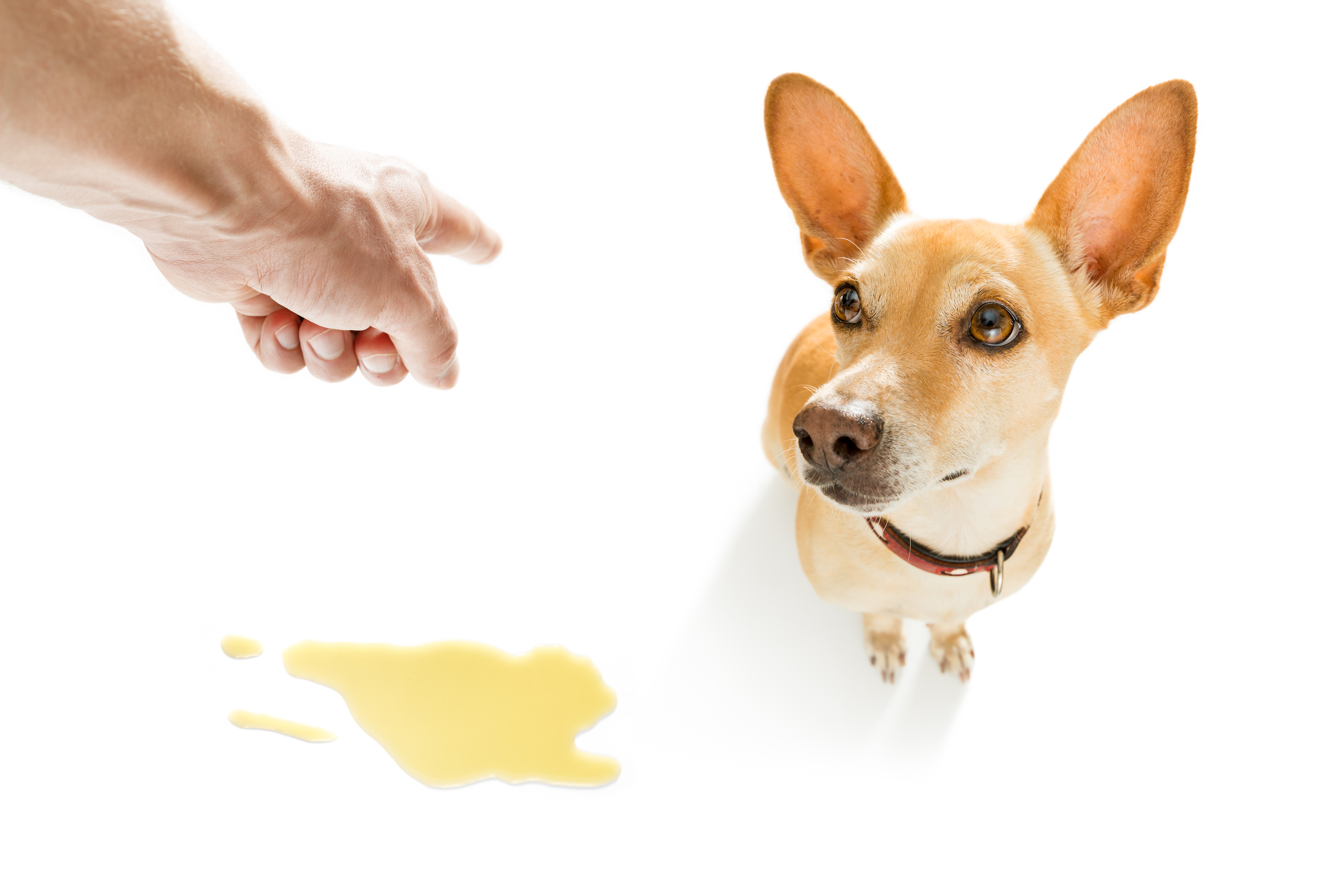
In practical terms, it means an accident is not just “a mess.” It’s a learning event.
If the puppy repeatedly eliminates on the wrong surfaces, it becomes a preferred surface and he will seek it out — because he thinks that he is doing the right thing.
If you want him to go outside, don’t confuse him by also offering pee pads—stick with one surface to help form a clear habit. If you use pads in the beginning, that’s is what he will look for later, and if there are no pads available, then it will be the next closest surface, most likely your carpet.
That’s why it’s important to start teaching your puppy to use the correct surface for elimination as soon as you bring him home. The sooner you start the less, you will have to undo.
Pick Your Battles
What happens when your dog has a preference so deep-seated that trying to change it is ruining your relationship?
I see this all the time, particularly with small dogs. You want him to go on the lush, green grass. He walks outside, completely bypasses the lawn, and eliminates directly on the concrete patio.
If you find yourself locked in a daily battle of wills, standing in the rain trying to force your dog onto a surface he genuinely dislikes, it’s time to re-evaluate.
Ask yourself: Is the dog still doing the most important part of the job?
If he’s eliminating outside and keeping your home clean, fighting over the exact square inch of the outdoors he chooses just creates unnecessary conflict and frustration for both of you.
Once you understand what’s driving your dog’s behavior, training is really simple. Your dog isn’t trying to make your life difficult. He’s doing exactly what his experience taught him to do. The job isn’t to punish the habit. It’s to build a better one.